
Parasitological Examination of Fecal Samples from Sheep, Goats, and Cattle at the Techiman Slaughterhouse

Abstract
This study investigates the parasitological examination of faecal samples collected from sheep, goats, and cattle at the Techiman Slaughterhouse. Initially, 341 samples were collected, which were subsequently sorted to 327 for analysis due to the loss of data for 14 samples. The primary aim was to identify the prevalence of parasitic infections and assess the health implications for livestock and public health. The samples were analyzed using qualitative and quantitative parasitological techniques, including flotation and sedimentation methods, to detect nematode and cestode eggs. Descriptive statistics were used to summarize the data and the prevalence of each parasite type. The findings reveal significant levels of parasitic infections, particularly strongyle ova and Moniezia expansa, highlighting the need for better management practices in livestock health.
Article Information
- Received
- Accepted
- Published
Academic Editor: John Okyere, CrossGen Limited.
Checked for plagiarism: Yes
Review by: Single-blind
Copyright © 2025 Dwaah Prince Kyere, et al.
 This is an open-access article distributed under the terms of the Creative Commons Attribution License, which permits unrestricted use, distribution, and reproduction in any medium, provided the original author and source are credited.
Corresponding author: Dwaah Prince Kyere, Disease Investigation Farm/Regional Veterinary Laboratory, Post Office Box122, Techiman, Bono East, Ghana —
Competing Interests
The authors have declared that no competing interests exist.
Funding
This study was undertaken with no external funding. The authors personally paid all of the research expenses, including sample collection, laboratory analysis, and data processing. This underlines our dedication to the research team's efforts to better understand and manage parasite illnesses in livestock at the Techiman Slaughterhouse.
Data Availability
The data supporting this study's findings are available upon request from the corresponding author.
Acknowledgements
We are grateful to the staff of the Techiman Disease Investigation Farm and Regional Veterinary Laboratory for their assistance with sample collection and analysis. Special thanks to the Techiman Metropolitan Veterinary Clinic Department for allowing access to the slaughterhouse facilities. Thank you to everyone who helped make this study a success.
Citation:
Introduction
Parasitic livestock infections are among the major factors of animal and public health globally. Parasitic infections can cause high economic losses due to reduced productivity, increased morbidity, mortality rates, and high treatment and control costs. Smith and Jones, 2018, state that sheep, goats, and cattle can be exposed to various gastrointestinal parasites, which are always a threat to the health status of these animals and the quality of the produced meat and dairy products.
Livestock farming is another vital sector of agriculture that generates much-needed livelihoods in many rural communities in Ghana according to the Ministry of Food and Agriculture (MOFA) 2022 report. For this study, the Techiman slaughterhouse has been identified as having bustling livestock markets and slaughterhouses serving both local and distant meat markets are among the seven slaughterhouses in the Bono East Region of Ghana. Although parasitic infections in livestock potentially impact animal and human health in this region, the present status of prevalence and diversity remains understudied.
The paper places much emphasis on the Techiman Slaughterhouse, which is a key facility with the slaughter of large numbers of sheep, goats, and cattle daily. Previous studies have indicated that abattoirs could act as hotspots for parasitic infections since there is direct contact between the animals and the environment leading to contamination. This therefore calls for the establishment of a parasitic profile of the livestock in this slaughterhouse to implement a control measure in safeguarding the health of the animals and human populations.
This study evaluates the prevalence and types of parasitic infections in sheep, goats, and cattle at the Techiman Slaughterhouse. Faecal samples were obtained from the animals totaling 327 and were analyzed at the Techiman Disease Investigation Farm and Regional Veterinary Laboratory. Identifying the common parasites and their prevalence will be valuable information toward strategies for improved management of animal health in the area under study.
It is expected that this study will help add to the existing body of knowledge about parasitic infections in livestock and the need for frequent monitoring, coupled with intervention. This shall not only benefit the health and productivity of the animals but also improve the safety of the meat products for consumers according to Muriu, J. (2023) and Knecht et al., (2012).
Objectives
· To determine the prevalence of parasitic infections in faecal samples from livestock at the Techiman Slaughterhouse.
· To identify the types of parasites, present in the samples.
· To assess the implications of these findings for livestock management and public health.
Materials and Methods
Study Area
The Techiman Slaughterhouse is situated in the Techiman Municipality of the Bono East Region in Ghana, an area dominated by an agrarian economy. There are mixed farming systems where livestock rearing is part of the local economy. The climate in Techiman is tropical, characterized by a wet season from March to October and a dry season from November to February, which influences the prevalence and spread of parasitic infections among livestock. This means that the slaughterhouse is a central point for processing animals from various farms and people around the area, making it an ideal location for assessing the parasitic burden in livestock in this region.
Sample Collection
A total of 341 fecal samples were collected from sheep, goats, and cattle and processed at the Techiman Slaughterhouse. After initial sorting, 327 samples were selected for detailed analysis. Sampling was done from December 2021 to May 2022 to ensure the sample obtained was representative of the animals slaughtered within the period covering equal months in both wet and dry seasons in Techiman. The animals were randomly selected to prevent bias in sampling and involved putting in efforts to ensure animals from different age sets, sexes, and breeds were included. Faecal samples were then collected from the rectum of each animal using sterile gloves and placed into labelled, airtight containers (prevent contamination and secure sample integrity); this was done according to 1. The samples were then transported in cool boxes to the Disease Investigation Farm and Regional Veterinary Laboratory for analysis within 24 hours of collection.
Laboratory Analysis
Upon arrival at the laboratory, the faecal samples were stored at 4°C until processing. The parasitological examination adopted both qualitative and quantitative techniques that identified and quantified the parasitic load in the samples 2, 3. The methods applied for the detection of nematode eggs, cestode eggs, and protozoan oocysts were flotation techniques, while the sedimentation technique was applied in detecting trematode eggs 4. In the flotation technique, saturated salt solution (Sodium chloride) served as the flotation medium, and the samples were viewed under a light microscope at 10× and 40× magnification. Sedimentation was carried out using a standard method whereby water was added to the stool, followed by centrifugation and subsequent examination for trematode eggs in the sediment.
Morphological features described in standard parasitology texts provided the basis for parasitic identification. The number of eggs or oocysts per gram of stool (EPG/OPG) was estimated in each sample to express the infection intensity. A second parasitologist's quality control of a sub-sample was done as quality control.
Data Analysis
Descriptive statistics were used to summarize the data and the prevalence of each parasite type was calculated and the results were represented on tables charts and graphs.
Results
Prevalence of Parasitic Infections
Prevalence = 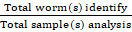
The analysis revealed the following results:
Strongyle Ova: 109 samples (33.33%)
Moniezia Expansa: 38 samples (11.6%)
No Ova Found: 157 samples (48.0%)
Both Strongyle and Moniezia Expansa: 23 samples (7.0%)
Demographic
Species Slaughtered
Among the livestock raised in Ghana, only three of them namely: Bovine (Cattle), Caprine (Goat) and Ovine (Sheep) are slaughtered at Techiman Slaughterhouse. Other like Pigs are slaughtered because more than 90% of the workers are Muslim Table 1, Table 2, Figure 1, Figure 2, Figure 3, Figure 4
Table 1. Species normally slaughtered grades| SPECIES | Count of SPECIES |
|---|---|
| BOVINE | 279 |
| CAPRINE | 11 |
| OVINE | 37 |
Figure 1. Breeds normally slaughtered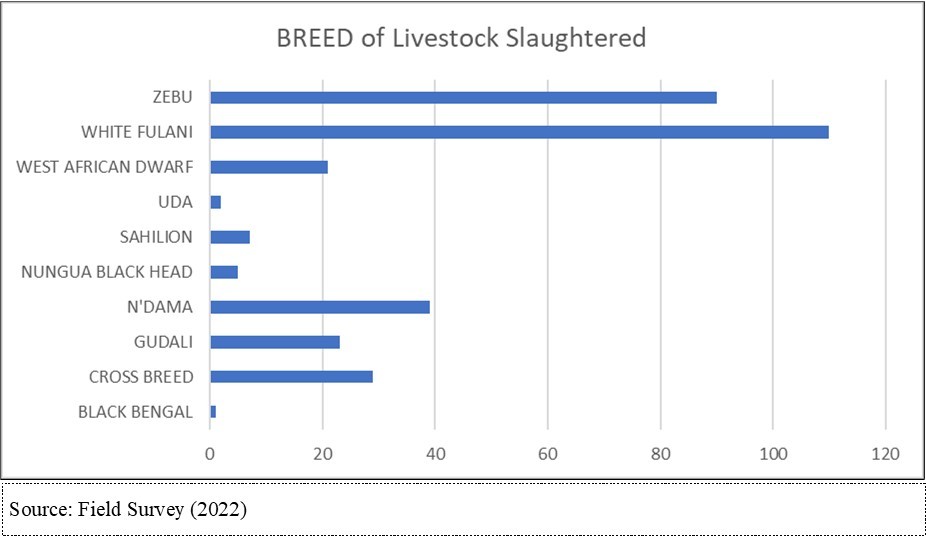
Download figure
| SEX | Total |
|---|---|
| F | 207 |
| M | 120 |
Figure 2. Age of slaughtered animal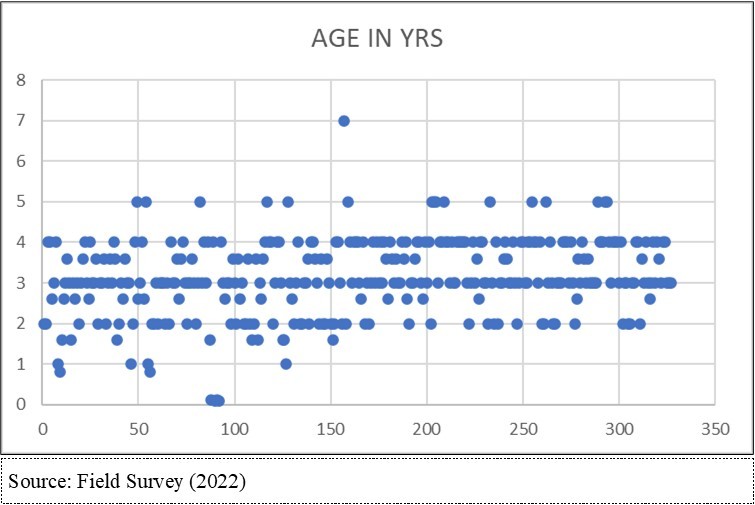
Download figure
Figure 3. Origin of animals to be Slaughtered 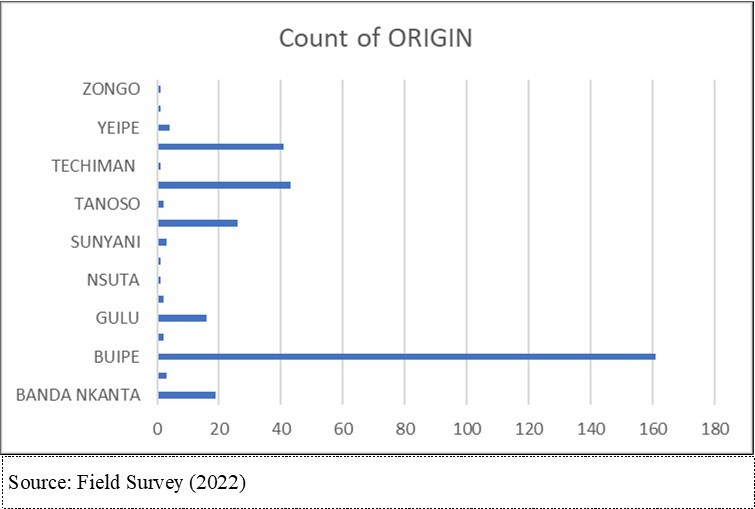
Download figure
Figure 4. Kind of helminths found in the slaughtered animal 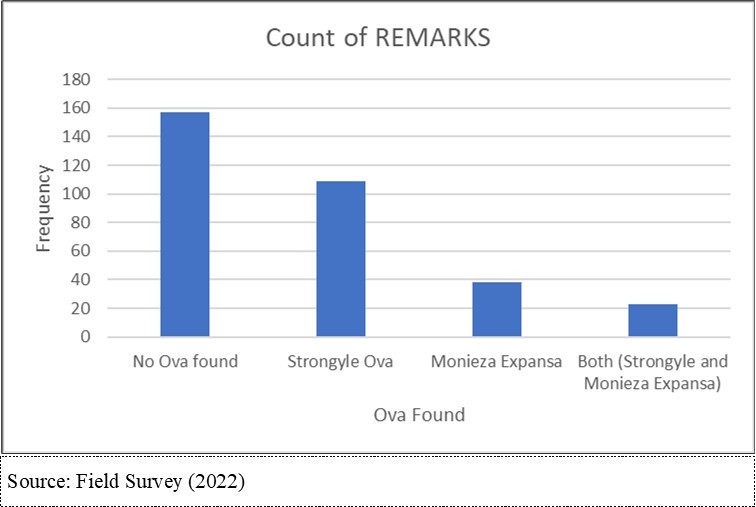
Download figure
Discussion
The findings of this study underscore the significant prevalence of parasitic infections among livestock at the Techiman Slaughterhouse, with a particular emphasis on Strongyle ova (33.33%) and Moniezia expansa (11.6%). These results align with the initial hypothesis presented in the introduction, where the potential for parasitic infections in livestock was highlighted as a pressing concern for both animal and public health. The presence of such parasites reaffirms the need for enhanced management practices, as emphasized by 2, 3, to mitigate the economic and health impacts these infections pose.
The study's methodology was critical in achieving reliable results. By employing both qualitative and quantitative parasitological techniques, the research ensured the accurate identification and quantification of parasites. The flotation and sedimentation methods, as detailed in 1, provided robust frameworks for detecting nematode eggs, cestode eggs, and trematode eggs, while the quality control measures ensured the precision of the data. This rigorous approach strengthens the credibility of the findings and supports their relevance in addressing parasitic challenges in livestock.
The demographic data revealed a notable difference in the distribution of parasitic infections among species and sexes, which may reflect underlying factors such as management practices, environmental exposure, and biological susceptibility. Notably, cattle (bovine) dominated the slaughterhouse samples, suggesting that any intervention strategies must prioritize this group due to its representation and potential impact on meat quality and safety.
These results resonate with the concerns highlighted in the introduction regarding the Techiman Slaughterhouse serving as a potential hotspot for parasitic infections due to direct animal-environment contact. The data also provide a baseline for designing targeted interventions, such as regular deworming protocols, improved slaughterhouse sanitation, and education for livestock handlers. Such measures could significantly enhance livestock health and productivity, while also ensuring safer meat products for consumers—a point emphasized by Muriu, J. (2023) and Knecht et al., (2012).
The study also illuminates gaps in current livestock management practices, particularly in the Bono East Region, and underscores the importance of integrating routine parasitic monitoring into veterinary and public health initiatives. Future studies could expand on these findings by exploring seasonal variations in parasitic prevalence and the effectiveness of existing control measures, contributing to more sustainable livestock farming practices in Ghana.
Conclusion
This study highlighted the significant prevalence of parasitic infections among livestock processed at the Techiman Slaughterhouse, with 33.33% of samples infected with Strongyle ova and 11.6% with Moniezia expansa. These findings underscore the need for improved veterinary practices and regular monitoring of parasitic infections to enhance livestock health and ensure meat safety for consumers. The study also emphasizes the critical role of slaughterhouses as focal points for detecting and controlling zoonotic diseases, calling for enhanced biosecurity measures and public health interventions. By providing a parasitic profile of sheep, goats, and cattle in this region, this research contributes valuable data toward the sustainable management of animal and public health.
Recommendations
There should be the establishment of frequent parasitological screenings, adequate abattoir sanitation and health certifications for cattle to reduce parasite transmission and increase meat safety.
Training programs should be organized for livestock handlers on parasite control and encourage integrated measures including deworming, pasture rotation and better feeding practices to reduce parasite loads sustainably.
To address zoonotic concerns, the collaboration between veterinary and public health agencies should be strengthened by expanding routine health checks and treatments and educating consumers on safe meat handling and cooking methods.
References
- 1.K L Paras, M, A N Vidyashankar, R M Kaplan. (2018) Comparison of faecal egg counting methods in four livestock species. , Veterinary Parasitology 257, 21-27.
- 2.Charlier J, Rinaldi L, Musella V, H W Ploeger, Chartier C et al. (2020) Initial assessment of the economic burden of major parasitic helminth infections to the ruminant livestock industry in Europe. Preventive Veterinary Medicine. 182, 105103-10.
- 3.L B, Nicolino R, R O Capanema, Oliveira C S F, Haddad J P A et al. (2015) Economic impacts of parasitic diseases in cattle. CABI Reviews. https://doi.org/10.1079/PAVSNNR201510051
- 4.Muriu J. (2023) Impact of Parasites and Parasitic Diseases on Animal Health and Productivity. , Journal of Animal Health 3(1), 13-23.
- 5.P A Bricarello, Longo C, Rocha da, A R, M J Hötzel. (2023) Understanding Animal-Plant-Parasite Interactions to Improve the Management of Gastrointestinal Nematodes in Grazing Ruminants. , Pathogens 12(4), 531-10.